A gate admits and refuses.
A filter removes what was native and adds something else in its place.
Gesture says what speech will not.
Erasure produces residue rather than disappearance.
Porcelain registers pressure, breakage, and attempted holding.
Image and sound refuse to synchronize into a single account.
Translation drifts.
Documents contradict one another, and none is allowed to win.
Across video, drawing, installation, porcelain, language, and works on paper, I work with the mechanisms that determine what crosses, what is held back, what is altered, and what arrives on the other side.
These questions have moved through the work for more than two decades. In escritos (Barcelona, 2001), a typewriter series, every carriage return threw the text into a new story — the machine decided where a sentence broke. In n+1 (2004), I taught friends to roll their r’s and assembled the recordings inside an unlit four-channel sound installation entered through a dark curtain. The years I lived and worked in Barcelona and Santiago made language acquisition, mistranslation, and partial comprehension lived material. Fieldwork, oral history, and constructed family narrative were already the working ground.
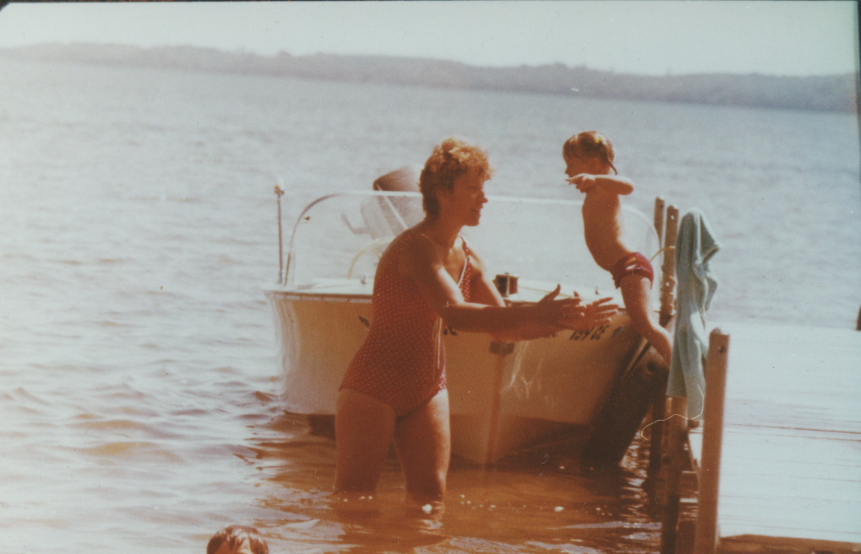
I was born to one set of parents and adopted by another. Raised through a closed, transracial adoption, I grew up with partial access to the family, language, and cultural knowledge connected to my birth. Adoption is one structure through which I learned how identity can be authored by institutions and by the accounts of others. In the artist book Milwaukee after coming to Milwaukee from California (2007), I cut apart family members’ childhood accounts and recombined them so that no single person’s memory could govern the reading.
I do not reclaim what was taken. I am claiming what was never given. In attempting to render my paternal grandparents’ home in Monterrey — demolished before I was allowed to enter it — I work through photographs, oral histories, family memories, and accounts I did not live. The resulting images remain unstable and incomplete. Identity is not recovered as a fixed inheritance. It is claimed, negotiated, mistranslated, and authored in relation to others.
My clinical training did not introduce these concerns. It gave me more precise ways to work with pacing, consent, embodiment, grief, relational risk, and the limits of participation. My clinical work does not turn the art into therapy; it gives the practice a deeper ethical, somatic, and relational architecture.
Alongside the studio work, I develop facilitated gatherings, participatory structures, and museotherapy frameworks that bring deep looking, bodily attention, and art-making into relation. Being Adopted began with three-word responses from 252 adopted adults across 16 countries and became a room of suspended index cards. We Are Not Our Cruxes brought adults who were adopted, people who grew up in foster care, and Angelenos curious about what those experiences hold into facilitated art-making and dialogue. These are not psychotherapy: they require no disclosure and promise no resolution. The work is sometimes described as social practice. What that description can miss is the form — the duration of an encounter, the structure of an invitation, who enters, what is withheld, how authorship is distributed, and what remains after the gathering ends.
During the installation of The sky broke when I was allowed to fly. / Se rompió el cielo cuando me dejaron volar., the work began to exceed the plan. Borrowed bricks became building material. Ceramics that had not made the cut were broken so they could join their fragmented cousins. I wrote Ersilia in pencil near the entrance, slightly out of order, and began to treat the gallery as a changing city of relations rather than a room containing separate works. Each time I returned, I altered something.
Some of that freedom was offered and some of it I granted myself. It let play into the practice in a way that has stayed. I am carrying it into current work with bureaucratic records, embossed and altered paper, porcelain, drawing, moving image, partial identification, and incompatible accounts of a single life.