Portfolio Categories Installation
Official website for artist Nicole Rademacher
Nicole Rademacher, Rademacher artist, Los Angeles, Chile, Barcelona, interdisciplinary, research-based, contemporary artist, conceptual artist, adoptee, adoptee voices, social practice artist, public practice artist, art therapy
-1
archive,tax-portfolio_category,term-installation,term-30,wp-theme-stockholm,qode-social-login-1.1.3,qode-restaurant-1.1.1,stockholm-core-2.4,select-theme-ver-9.13,ajax_fade,page_not_loaded,vertical_menu_enabled, vertical_menu_transparency vertical_menu_transparency_on,paspartu_enabled,menu-animation-line-through,side_area_uncovered,,qode_menu_,wpb-js-composer js-comp-ver-6.13.0,vc_responsive

Being Adopted

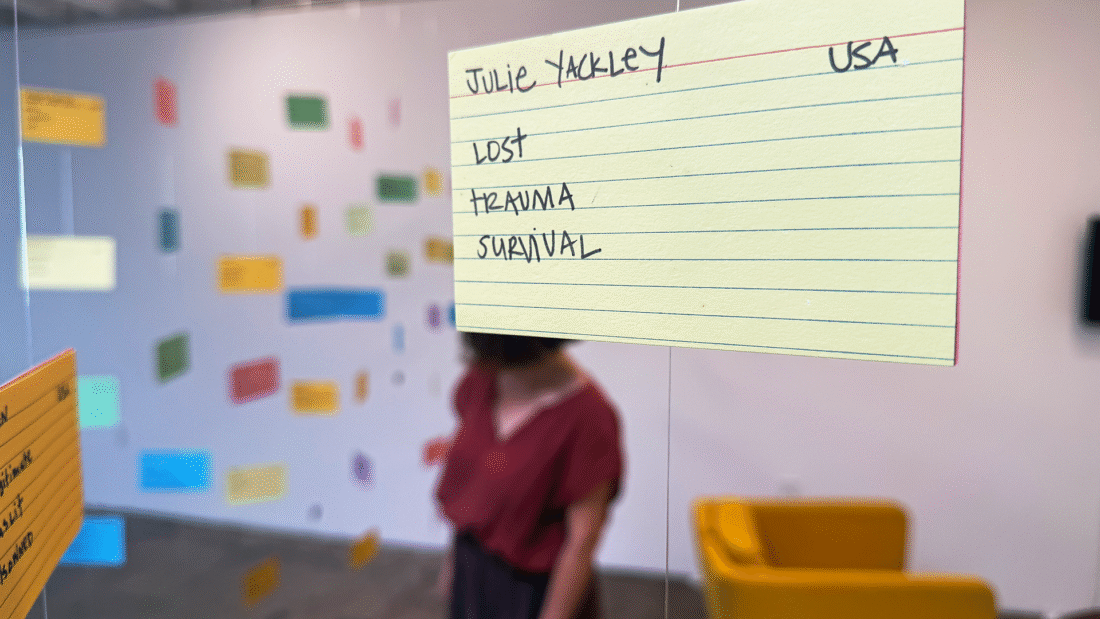
Being Adopted is a three-part participatory installation exploring the emotional landscape of adult adoptees through crowdsourced words, immersive environment, and a two-channel video. An online questionnaire asked self-identified adult adoptees: “If you could choose any 3 words to describe your experience as an adoptee, which ones would you choose?” 252 people from 16 countries responded, generating 371 distinct words.

Each participant’s three words, name (as they identified), and country were hand-written onto colored index cards, creating a physical archive of adoptee voices. These cards are suspended at varying heights throughout the installation space using fishing line and lead weights — the fishing line evoking invisibility, the varied heights suggesting the scattered, non-hierarchical nature of adoptee experiences. The suspended cards create two curtain-like walls to form an intimate room within the larger gallery space.

Inside this room, two chairs face a two-channel video installation. On one channel, the artist plays the childhood game of Memory with cards displaying the individual words, revealing both shared themes and divergences across adoptee experiences. The second channel presents an abstract, rhythmic counting and display of all 371 words. A coffee table between the chairs holds card sets, inviting visitors to play their own game of Memory: mirroring the fragmented, repetitive work of piecing together identity. The fine-tip Sharpie used to inscribe the words bled through the paper; thus, while playing Memory and the cards are face down, they display shadow-traces visible before the words themselves are revealed. This sequence, encountering residue before source, echoes the adoptee experience of piecing together identity from fragments.

The installation transforms data into embodied experience: visitors must move through the suspended cards to enter the viewing space, physically navigating the density of adoptee voices. The participatory game element shifts viewers from passive observers to active participants in the work of making connections and seeking patterns: the same labor adoptees perform in understanding our experiences within the broader community context.

252

total respondents

16

countries represented

371

distinct words used


The project is ongoing… Are you an adult adoptee?


What are your three words?

Not Valid For Identification Purposes

Not Valid For Identification Purposes is an inkjet print on Vellum of my original birth certificate suspended with a paperclip and fishing line. It is an exploration of my identity, as this is the only document of the name given to me by my birth mom, a name that was erased for me.

Many adopted people are denied access to their original birth certificates. When I requested mine, the adoption agency created a certified copy and stamped it “Not Valid For Identification Purposes.” The printing on Vellum and suspension of the scan speak to the illusory nature of this document. The flimsy piece of Vellum gently twists and turns as people walk by or breathe when close to it. This person named on the document lives in the memory of my birth parents and in my own imagination.

Nesting

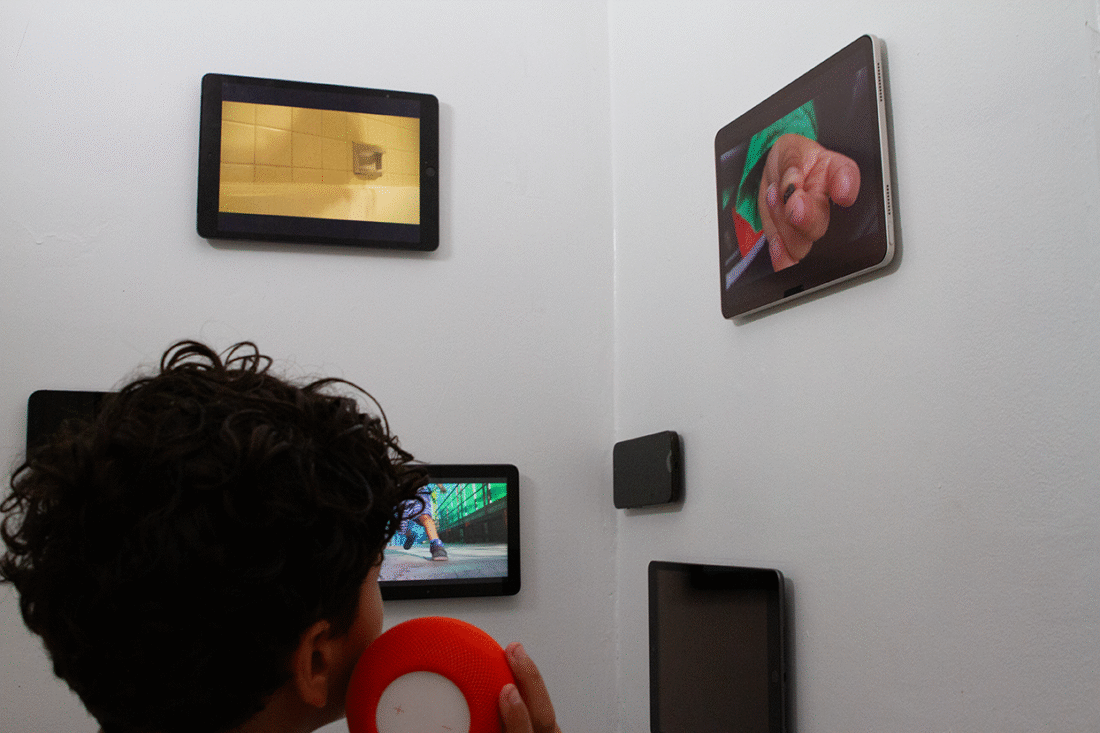
Nesting is a six-channel video installation exploring the intimate moments of early motherhood through a scattered yet connected viewing experience. Ten short videos are distributed across six devices of varying sizes mounted at different heights in the corner of a gallery space, creating a constellation of moving images that viewers can navigate individually or with another seated viewer.
Through unique editing and unconventional framing, the work examines concepts of intimacy and attunement as they manifest in the mother-child relationship. The installation’s design mirrors the fragmented yet interconnected nature of early parenting—moments of connection scattered across time and space, requiring the viewer to move between screens much like a parent moves between the multiple demands of caregiving.
The varying device sizes reference the different scales of attention motherhood requires, from the intimate close-up moments captured on smaller screens to broader contexts displayed on larger ones. A single bluetooth speaker provides audio that drifts across the installation space, creating an sonic environment that unifies the fragmented visual narrative. The idea that two people can listen to the audio at once, offers another level of intimacy while experiencing the work.
By documenting my time with my son during his early years, I examined my own insecurities about mothering and belonging, questions that the installation format extends to viewers as they navigate their own relationship to the intimate scenes unfolding across multiple screens.